




The short answer: Use October to settle five things: what your review should achieve, which perspectives count, how goals and scores will be judged, when each stage happens, and how you’ll check scores are consistent before results go out.

Most SMEs start thinking about year-end reviews in December, just as everyone is closing the books, chasing targets and counting down to the holidays. Forms go out late; managers rush through them, and feedback that should shape the year ahead ends up feeling like a box-ticking exercise.
It doesn’t have to be that way. If you plan your yearly performance review in October, you have time to fix the process before it starts.

Why the December scramble keeps happening
The root problem is that many businesses treat performance reviews as a single event rather than a process. Someone sends out a form, waits for responses, and collates with the scores. Everything happens in the last few weeks of the year, when attention is at its thinnest.
Spreadsheets and forwarded documents make it worse. Managers work from different versions; comments get lost in email threads, and HR spends more time chasing submissions than improving the process. By the time everything is collated, the conversation that matters most, between an employee and their manager, has lost its momentum.

Decide what this year’s review needs to achieve
Before you touch a form, be clear about the purpose. Is the review mainly for development, helping people understand where to grow? Is it for recognition, so strong performers feel seen? Or will it inform reward and promotion discussions?
Most reviews serve more than one purpose, and that’s fine. The point is to decide deliberately, because the purpose shapes the questions you ask, who you ask, and how much weight each answer carries. A review built for development looks very different from one built to support pay decisions.

Five things to settle before November
With the purpose agreed, work through these five areas while there’s still time to get them right:
-
Review structure. Decide which perspectives count. A manager’s view is essential, but self-reviews, peer reviews and upward feedback from team members can fill in what one person can’t see.
-
Goals and KPIs. Check whether employees were measured against clear, agreed targets. If goals were vague, fix that now rather than debating them in December.
-
Scoring. Decide how much each question, section and reviewer should count. Should a peer’s rating carry the same weight as a manager’s? Agreeing on this upfront prevents disputes later.
-
Timeline. Work backwards from your year-end deadline. Allow time for peer nominations, submissions, manager reviews and final sign-off, with a buffer for the inevitable delays.
-
Consistency. Plan how you’ll check that one manager’s “4 out of 5” means the same as another’s.

Build in time for calibration
That last point deserves more attention. Every organisation has managers who rate generously and others who hold back. Neither is wrong, but if scores go out unchecked, two employees with similar performance can receive very different results. That damages trust quickly.
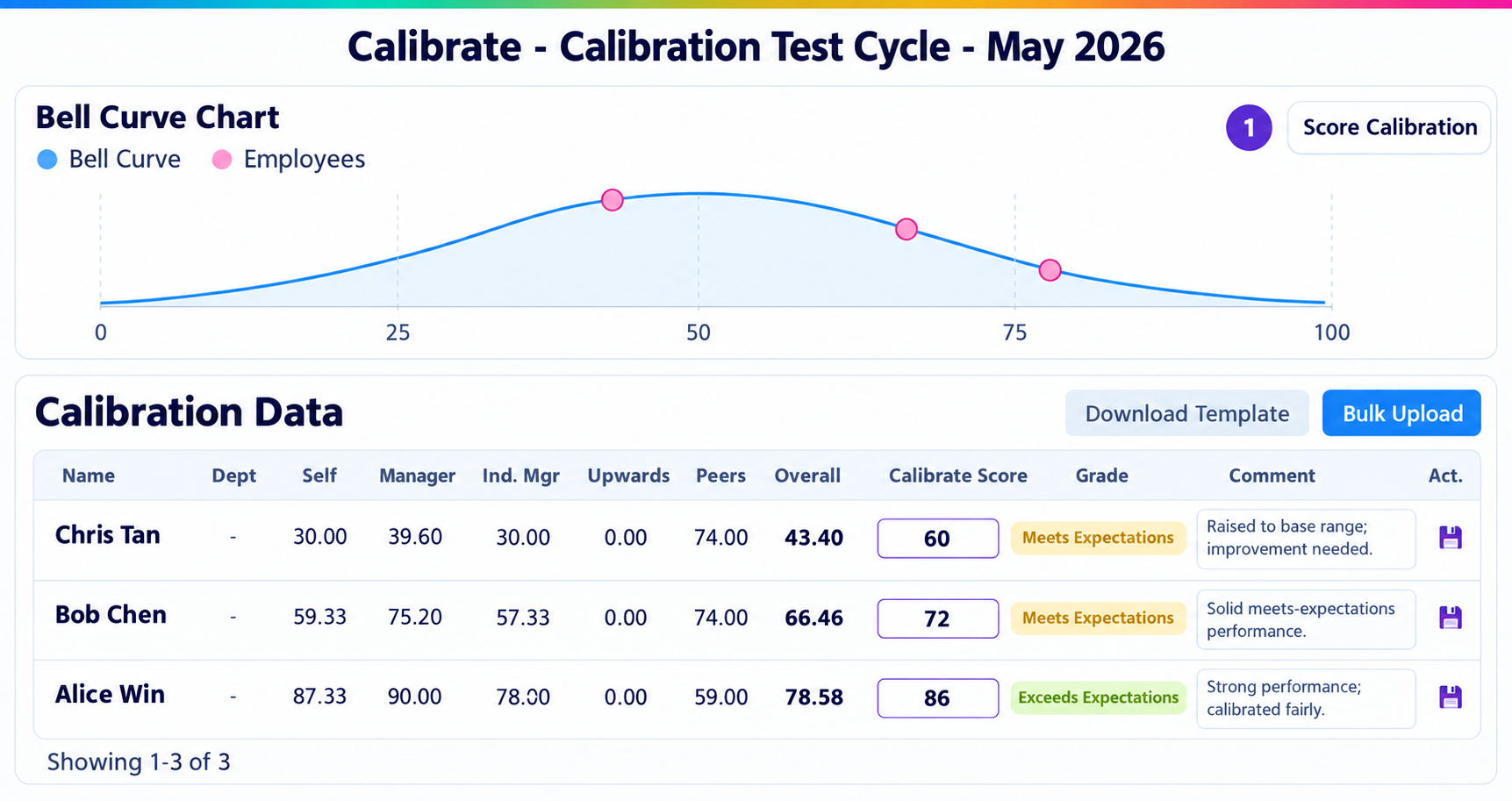
Calibration means reviewing scores side by side before they’re released, looking at how they’re distributed and adjusting where needed, with a clear note explaining each change. It doesn’t have to be complicated, but it does need time. Set aside at least a week in your timeline for it, rather than squeezing it into the final days before results are due.
Make follow-up someone else’s job
Chasing late reviews is one of the most time-consuming parts of any cycle. Instead of relying on individual emails and a tracking spreadsheet, set up automated reminders before, on and after each deadline. Pair them with a single view that shows who has completed their reviews and who hasn’t, so you can step in only where it’s actually needed.
Start the season organised, not overwhelmed
Planning in October turns year-end reviews from a scramble into a structured process, one that gives employees meaningful feedback and gives leaders insight they can act on.
The right tools make that process far easier to run. JustLogin Appraisal brings the whole review cycle into one place. You can build weighted forms, including self, manager, peer and upward reviews, calibrate scores before release, automate reminders, and pull reports once the cycle closes. It means less time spent managing the process, and more time spent on the conversations that matter.


